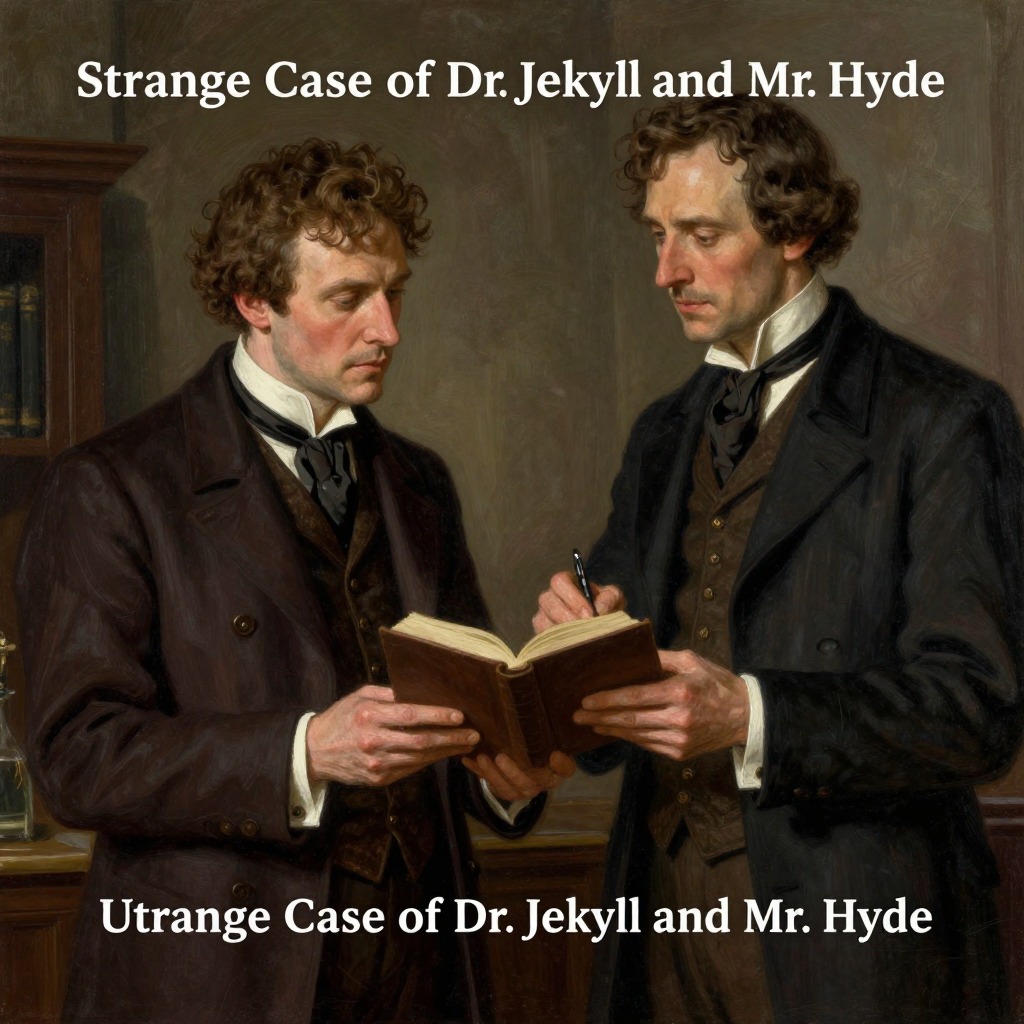
Cavendish Square
Cavendish Square, a citadel of medicine in London, is the home of Dr. Hastie Lanyon, one of Henry Jekyll's oldest friends and a fellow physician. It is a place of professional respectability and scientific orthodoxy, standing in stark contrast to the secretive laboratory and the squalid Soho address associated with Edward Hyde. The square serves as the setting for the story's most direct supernatural revelation, where the boundaries of scientific belief are shattered and the horrifying truth of Jekyll's experiment is forced upon an unwilling witness.
Location and Character
Dr. Lanyon's house in Cavendish Square is described as a place of hearty, healthy, and dapper respectability, presided over by a red-faced gentleman with a boisterous manner. It is here that Mr. Utterson first seeks information about Hyde, hoping that Lanyon, as a fellow scientist and old friend, might shed light on Jekyll's strange behavior. The square itself represents the established, materialist medical establishment that Jekyll has abandoned for his "unscientific balderdash" and transcendental experiments. Lanyon's home is a bastion of conventional science, making it the perfect stage for the confrontation with the inexplicable.
The Night of Revelation
The most significant event at Cavendish Square occurs on the night of January 9th, when Lanyon, following Jekyll's desperate and frantic instructions, retrieves a drawer from Jekyll's cabinet and brings it to his own home. The drawer contains the transformative drug: a phial of blood-red liquor, a white crystalline salt, and a notebook of experimental dates. At midnight, a small, deformed man—Edward Hyde—arrives at Lanyon's door, consumed by a sombre excitement and a desperate urgency. In Lanyon's consulting room, under the bright light, Hyde mixes the potion, drinks it, and before Lanyon's horrified eyes, undergoes a physical metamorphosis into Henry Jekyll. This event, which Lanyon describes as a "prodigy to stagger the unbelief of Satan," is the story's central anagnorisis, a moment of terrible knowledge that destroys Lanyon's worldview and his life.
Consequences and Aftermath
The revelation at Cavendish Square has devastating consequences. Lanyon, a man of science who denied the virtue of transcendental medicine, is psychologically shattered by what he has witnessed. He describes his soul as "shaken to its roots," and he is left with a deadliest terror that sits by him at all hours. The experience proves fatal; Lanyon takes to his bed within a week and dies in less than a fortnight. Before his death, he seals a narrative of the event, instructing that it be opened only upon the death or disappearance of Henry Jekyll. This document, along with Jekyll's own confession, becomes the key to unraveling the entire mystery, and it is to Cavendish Square that Utterson must look for the final, terrible explanation of his friend's fate.